BENGHAZI, Libya (AP) ? The head of Libya's transitional government on Sunday suspended delegates from Benghazi, the city that kicked off the movement that toppled ruler Moammar Gadhafi last year.
The suspension the latest sign of discord within the body that led the anti-Gadhafi uprising but has struggled to establish an effective government to replace his regime.
The move follows protests in Benghazi accusing the body of corruption and not moving fast enough on reform. It was prompted by street protests and rejected by the delegates.
The announcement came the day after protesters stormed the National Transitional Council offices in Benghazi and carted off computers, chairs and desks while Mustafa Abdul-Jalil, head of the NTC, was holed up inside.
Abdul-Jalil told The Associated Press he suspended the six representatives from Benghazi, the main city in eastern Libya. They can continue to serve only if approved by the local city council.
Abdul-Jalil said he appointed a council of religious leaders to investigate corruption charges and identify people with links to the Gadhafi regime.
The body's deputy head, Abdel-Hafiz Ghoga, resigned in protest over the suspensions. Ghoga, known for his polished language and expensive suits, was a prominent spokesman during the eight-month civil war that ended with Gadhafi's capture and killing in October.
Another delegate, Fathi Baja, called the move "illegitimate" and said he would stand down only if the people of Benghazi asked him to. Baja, a well known critic of Gadhafi even before the uprising, also criticized the appointment of religious leaders, saying that when he was criticizing Gadhafi, "they were calling on people to obey the leader."
Also Sunday, the head of the committee tasked with preparing the country's election law said its release would be delayed for one week. The final law, which was set to be announced Sunday, will be made public on Jan. 28, said Othman al-Mugherhi.
The committee published a draft law earlier this month and said it would solicit comments from Libyans. Al-Mugherhi said the delay will allow the committee to consider these comments while drafting the final law.
The law will spell out how Libyans will elect the 200-members national congress, which will oversee the drafting of a constitution. The body is supposed to be elected before June 23.
Al-Mugherhi also announced the formation of a 17-member electoral commission to oversee the vote. The body contains professors, judges, lawyers and men and women representing non-governmental organizations, he said.
Under Gadhafi's rule, Libya had no working parliament for four decades.
Recent experiments conducted at the Australian Institute of Marine Science (AIMS) produced striking results, showing for the first time that corals hosting a single type of "zooxanthellae" can have different levels of thermal tolerance ? a feature that was only known previously for corals with a mix of zooxanthellae.
Zooxanthellae are algal cells that live within the tissue of living coral and provide the coral host with energy; the relationship is crucial for the coral's survival. Rising ocean temperatures can lead to the loss of zooxanthellae from the coral host, as a consequence the coral loses its tissue colour and its primary source of energy, a process known as 'coral bleaching'. Globally, coral bleaching has led to significant loss of coral, and with rising ocean temperatures, poses a major threat to coral reefs.
It was previously known that corals hosting more than one type of zooxanthellae could better cope with temperature changes by favouring types of zooxanthellae that have greater thermal tolerance. However, until now it was not known if corals hosting a single type of zooxanthellae could have different levels of thermal tolerance.
Results recently published in the prestigious scientific journal, Nature Climate Change, showed corals that only host a single type of zooxanthellae may in fact differ in their thermal tolerance. This finding is important because many species of coral are dominated by a single type of zooxanthellae.
PhD student, Ms Emily Howells from the Australian Research Council Centre of Excellence for Coral Reef Studies (CoECRS) at James Cook University, Townsville, together with scientists from AIMS and CoECRS, collected two populations of a single type of zooxanthellae (known as C1) from two locations on the Great Barrier Reef. The population collected from Magnetic Island near Townsville experiences average ocean temperatures 2?C higher than the population collected from the Whitsunday Islands. In experiments at AIMS, young corals were treated with one or other of the two different populations of zooxanthellae, and exposed to elevated water temperatures, as might occur during bleaching events.
The results were striking. Corals with zooxanthellae from the warmer region coped well with higher temperatures, staying healthy and growing rapidly, whilst corals with zooxanthellae from the cooler region suffered severe bleaching (loss of the zooxanthellae) and actually reduced in size as they partly died off.
Madeleine van Oppen, ARC Future Fellow at AIMS, says the research results will likely have a major impact on the field, as until now corals associating with the same type of zooxanthellae have been viewed as physiologically similar, irrespective of their geographical location.
"Our research suggests that populations of a single type of zooxanthellae have adapted to local conditions as can be seen from the remarkably different results of the two populations used in this study. If zooxanthellae populations are able to further adapt to increases in temperature at the pace at which oceans warm, they may assist corals to increase their thermal tolerance and survive into the future." says Emily Howells.
"However, we do not yet know how fast zooxanthellae can adapt, highlighting an important area of future research", says Bette Willis, Professor from the CoECRS at James Cook University.
Research at AIMS is therefore currently assessing whether zooxanthellae can continue to adapt to increasing temperatures and at what rate. This work in progress will provide insights into the capacity of zooxanthellae to adapt to future climate change.
###
ARC Centre of Excellence in Coral Reef Studies: http://www.coralcoe.org.au/
Thanks to ARC Centre of Excellence in Coral Reef Studies for this article.
This press release was posted to serve as a topic for discussion. Please comment below. We try our best to only post press releases that are associated with peer reviewed scientific literature. Critical discussions of the research are appreciated. If you need help finding a link to the original article, please contact us on twitter or via e-mail.
NEW YORK (AP) ? Ryan Braun's appeal of his positive drug test began Thursday before baseball arbitrator Shyam Das.
The start of the National League MVP's appeal, first reported by the New York Daily News, was confirmed by a person familiar with the session who spoke on condition of anonymity because the proceeding was not to be made public.
Calls to Braun's agent, Nez Balelo, and Major League Baseball spokesman Pat Courtney were not returned.
When the positive drug test was first reported by ESPN.com last month, Braun had a spokesman issue a statement saying there were circumstances supporting "Ryan's complete innocence."
Under the joint drug agreement between baseball teams and the players' association, Braun will have to prove "the presence of a prohibited substance in his urine was not due to his fault or negligence."
As Braun tries to avoid a 50-game suspension, the burden is a heavy one to overcome. A baseball arbitrator has never ordered a suspension overturned following a grievance hearing.
The person did not know whether the hearing had concluded or whether it would extend into at least one more session. Typically in grievances, after the hearing the sides may submit written final arguments before the arbitrator rules.
MLB has not confirmed the positive test. Baseball's drug agreement says first positive tests are not made public until after the appeals process has been completed.
Technically, the arbitration is before a three-person panel that also includes a representative of management and the union. The independent member, Das, is the decisive vote in nearly all cases.
Braun is to receive his MVP Award on Saturday at the annual dinner of the New York chapter of the Baseball Writers' Association of America. While he is expected to speak to the crowd from the dais in a hotel ballroom, he is not expected to take questions from reporters.
Braun has known about since the positive test since late October, people familiar with the appeals process said last month. If suspended, Braun wouldn't be eligible to play for the NL Central champions until May 31 at Dodger Stadium, barring any postponements. He would miss the first 57 days of the major league season, losing about $1.87 million of his $6 million salary.
The 28-year-old the 2007 NL Rookie of the Year, hit .312 with 33 homers and 111 RBIs last season and led Milwaukee to the NL championship series, where the Brewers lost to the eventual World Series champion St. Louis Cardinals.
Speaker Boehner accuses Obama of 'selling out American jobs for politics,' but Keystone pipeline operator TransCanada says it will submit plans for a rerouted project later this year.
President Obama announced Wednesday he is putting the controversial Keystone XL oil pipeline expansion project on hold, saying a decision can?t be made by the February deadline imposed by Congress. While environmental groups cheered the news, the setback is temporary and the pipeline operator says it will resubmit plans to have the pipeline running in 2014.
Skip to next paragraph
The decision to deny the company its permit, issued through the US State Department, is considered a political risk by the president with Republican leaders saying that preventing the pipeline ? proposed to be the largest of its kind in North American ? is harmful to the national interest by limiting energy security and preventing job creation.
The Obama administration was first expected to rule on the permit, sought by operator TransCanada of Alberta, Canada, by late December. However, the administration sought a one-year extension, saying a more thorough environmental assessment was needed, including further exploration of alternate routes.
Republicans in Congress, in return for their support for an extension of the payroll tax holiday, forced the new Feb. 21 deadline, a date that Mr. Obama on Wednesday called ?rushed and arbitrary.?
His statement stressed the decision was not a ruling on the merits of the pipeline, but on the action of Congress, which he said, ?prevented the State Department from gathering the information necessary to approve the project and protect the American people.?
?I?m disappointed that Republicans in Congress forced this decision, but it does not change my administration?s commitment to American-made energy that creates jobs and reduces our dependence on oil,? he said.
House Speaker John Boehner (R) of Ohio reacted quickly to news of Obama's decision, characterizing it as ?selling out American jobs for politics? and saying TransCanada would be forced to rely further on China as a consumer of its exported oil.
?The president was given the authority to block this project only ? and only ? if he believes it?s not in the national interest of the United States. Is it not in the national interest to create tens of thousands of jobs here in America with private investment?? Speaker Boehner said. ?The president has said he?ll do anything that he can to create jobs. Today that promise was broken.?
The Keystone XL project is far from resolved, as TransCanada is allowed to resubmit its permitting application, which the company says it will have ready by September or October.
Following Obama?s decision, the company announced it will work with the Nebraska Department of Environmental Quality to determine a possible new route to avoid running the pipeline over portions of the Ogallala Aquifer, a major source of fresh water for drinking and agriculture that runs under several states in the US heartland.
Last year, Nebraska Gov. Dave Heineman, a Republican, asked Obama to block the pipeline as outlined in its current proposal, but said he would support the project if a new route were developed to avoid such sensitive agricultural terrain.
Russ Girling, president and chief executive officer of TransCanada, said in a statement that while he disappointed with the decision, he expects the pipeline to start operations in 2014.
VCs poured significantly more money into deals in 2011, according to a recently released MoneyTree Report by PricewaterhouseCoopers and the National Venture Capital Association, based on data from Thomson Reuters. Venture capitalists invested $28.4 billion in 3,673 deals in 2011, an increase of 22 percent in dollars and a 4 percent rise in deals over the prior year. The amount of venture dollars invested in 2011 represents the third highest annual investment total in the past ten years. In terms of the fourth quarter, investments in the quarter totaled $6.6 billion in 844 deals, which is actually a 10 percent decrease in terms of dollar amount and an 11 percent decrease in deals from the third quarter of 2011 when $7.3 billion went into 953 deals.
New report reviews US nitrogen pollution impacts and solutionsPublic release date: 17-Jan-2012 [ | E-mail | Share ]
Contact: Ian Vorster ivorster@whrc.org 508-444-1509 Woods Hole Research Center
Highlights new research, and offers solutions for a nitrogen-soaked world
The nitrogen cycle has been profoundly altered by human activities, and that in turn is affecting human health, air and water quality, and biodiversity in the U.S., according to a multi-disciplinary team of scientists writing in the 15th publication of the Ecological Society of America's Issues in Ecology. In "Excess Nitrogen in the U.S Environment: Trends, Risks, and Solutions," lead author Eric Davidson (Woods Hole Research Center) and 15 colleagues from universities, government, and the private sector review the major sources of reactive nitrogen in the U.S., resulting effects on health and the environment, and potential solutions.
Nitrogen is both an essential nutrient and a pollutant, a byproduct of fossil fuel combustion and a fertilizer that feeds billions, a benefit and a hazard, depending on form, location, and quantity. "Nitrogen pollution touches everyone's lives," said Davidson, a soil ecologist and executive director of the Woods Hole Research Center. "This report highlights the latest understanding of how it's harming human health, choking estuaries with algal growth, and threatening biodiversity, such as by changing how trees grow in our forests." Its authors, a diverse mix of agronomists, ecologists, groundwater geochemists, air quality specialists, and epidemiologists connect the dots between all of the ways that excess nitrogen in the environment affects people, economics, and ecology. They argue for a systematic, rather than piecemeal, approach to managing the resource and its consequences. "We're really trying to identify solutions," emphasizes Davidson.
There is good news: effective air quality regulation has reduced nitrogen pollution from U.S. energy and transportation sectors. On the other hand, agricultural emissions are increasing. Ammonia, a byproduct of livestock waste, remains mostly unregulated and is expected to increase unless better controls on ammonia emissions from livestock operations are implemented. Additionally, crop production agriculture is heavily dependent on synthetic nitrogen fertilizer to increase crop yields, but approximately half of all nitrogen fertilizer applied is not taken up by crops and is lost to the environment.
"Nitrogen is readily mobile, and very efficiently distributed through wind and water," said author James Galloway, a biogeochemist at the University of Virginia. Airborne nitrogen from agricultural fields, manure piles, automobile tailpipes, and smokestacks travels with the wind to settle over distant forests and coastal areas.
The report reviews agricultural solutions, and notes that applying current practices and technologies can reduce nitrogen pollution from farm and livestock operations by 30 to 50 percent. It tabulates strategies to help farmers optimize efficient use of fertilizer, rather than just maximize crop yield, including buffer strips and wetlands, manure management, and ideal patterns of fertilizer application. It also considers the cost of implementing them, and programs for buffering farmers against losses in bad years.
"There are a variety of impacts due to the human use of nitrogen," said Galloway. "The biggest is a positive one, in that it allows us to grow food for Americans and people in other countries, and we don't want to lose sight of that." Balancing inexpensive abundant food against the damage done by nitrogen escaping into the environment is a conversation the authors would like to hear more prominently in policy arenas. "Yes, we have to feed people, but we also need clean drinking water, clean air, and fisheries in the Gulf of Mexico," emphasizes Davidson. "The science helps to show those tradeoffs, and where we most stand to gain from improved nutrient management in agriculture."
The following impacts from nitrogen pollution are cited:
More than 1.5 million Americans drink well water contaminated with nitrate, a regulated drinking water pollutant, either above or near EPA standards, potentially placing them at increased risk of birth defects and cancer, which are noted in the report.
Agricultural and sewage system nutrient releases are likely linked to coral diseases, bird die-offs, fish diseases, and human diarrheal diseases and vector-borne infections transmitted by insects such as mosquitoes and ticks.
Two-thirds of U.S. coastal systems are moderately to severely impaired due to nutrient loading. There are now nearly 300 hypoxic (low oxygen) zones along the U.S. coastline.
Air pollution continues to reduce biodiversity, with exotic, invasive species dominating native species that are sensitive to excess reactive nitrogen. For example, in California, airborne nitrogen is impacting one third of the state's natural land areas, and the expansion of N-loving, non-native, highly flammable grasses in the western U.S. has increased fire risk.
###
The report is published by Ecological Society of America's Issues in Ecology, and can be viewed in Issue 15 at http://www.esa.org/science_resources/issues_ecology.php
The Woods Hole Research Center addresses the great issues for a healthy planet through science, education, and policy. We combine satellite remote sensing with field research to study, model, map, and monitor Earth's chemistry and ecology, and we use this knowledge to address the planet's great issues. We work around the Earth, from local to global scales, including the Amazon and Cerrado of South America, the Congo Basin and East Africa, the high latitudes of North American and northen Eurasia, and across the United States. We are unique in the depth of our science capability in combination with our commitment to the environment.
[ | E-mail | Share ]
?
AAAS and EurekAlert! are not responsible for the accuracy of news releases posted to EurekAlert! by contributing institutions or for the use of any information through the EurekAlert! system.
New report reviews US nitrogen pollution impacts and solutionsPublic release date: 17-Jan-2012 [ | E-mail | Share ]
Contact: Ian Vorster ivorster@whrc.org 508-444-1509 Woods Hole Research Center
Highlights new research, and offers solutions for a nitrogen-soaked world
The nitrogen cycle has been profoundly altered by human activities, and that in turn is affecting human health, air and water quality, and biodiversity in the U.S., according to a multi-disciplinary team of scientists writing in the 15th publication of the Ecological Society of America's Issues in Ecology. In "Excess Nitrogen in the U.S Environment: Trends, Risks, and Solutions," lead author Eric Davidson (Woods Hole Research Center) and 15 colleagues from universities, government, and the private sector review the major sources of reactive nitrogen in the U.S., resulting effects on health and the environment, and potential solutions.
Nitrogen is both an essential nutrient and a pollutant, a byproduct of fossil fuel combustion and a fertilizer that feeds billions, a benefit and a hazard, depending on form, location, and quantity. "Nitrogen pollution touches everyone's lives," said Davidson, a soil ecologist and executive director of the Woods Hole Research Center. "This report highlights the latest understanding of how it's harming human health, choking estuaries with algal growth, and threatening biodiversity, such as by changing how trees grow in our forests." Its authors, a diverse mix of agronomists, ecologists, groundwater geochemists, air quality specialists, and epidemiologists connect the dots between all of the ways that excess nitrogen in the environment affects people, economics, and ecology. They argue for a systematic, rather than piecemeal, approach to managing the resource and its consequences. "We're really trying to identify solutions," emphasizes Davidson.
There is good news: effective air quality regulation has reduced nitrogen pollution from U.S. energy and transportation sectors. On the other hand, agricultural emissions are increasing. Ammonia, a byproduct of livestock waste, remains mostly unregulated and is expected to increase unless better controls on ammonia emissions from livestock operations are implemented. Additionally, crop production agriculture is heavily dependent on synthetic nitrogen fertilizer to increase crop yields, but approximately half of all nitrogen fertilizer applied is not taken up by crops and is lost to the environment.
"Nitrogen is readily mobile, and very efficiently distributed through wind and water," said author James Galloway, a biogeochemist at the University of Virginia. Airborne nitrogen from agricultural fields, manure piles, automobile tailpipes, and smokestacks travels with the wind to settle over distant forests and coastal areas.
The report reviews agricultural solutions, and notes that applying current practices and technologies can reduce nitrogen pollution from farm and livestock operations by 30 to 50 percent. It tabulates strategies to help farmers optimize efficient use of fertilizer, rather than just maximize crop yield, including buffer strips and wetlands, manure management, and ideal patterns of fertilizer application. It also considers the cost of implementing them, and programs for buffering farmers against losses in bad years.
"There are a variety of impacts due to the human use of nitrogen," said Galloway. "The biggest is a positive one, in that it allows us to grow food for Americans and people in other countries, and we don't want to lose sight of that." Balancing inexpensive abundant food against the damage done by nitrogen escaping into the environment is a conversation the authors would like to hear more prominently in policy arenas. "Yes, we have to feed people, but we also need clean drinking water, clean air, and fisheries in the Gulf of Mexico," emphasizes Davidson. "The science helps to show those tradeoffs, and where we most stand to gain from improved nutrient management in agriculture."
The following impacts from nitrogen pollution are cited:
More than 1.5 million Americans drink well water contaminated with nitrate, a regulated drinking water pollutant, either above or near EPA standards, potentially placing them at increased risk of birth defects and cancer, which are noted in the report.
Agricultural and sewage system nutrient releases are likely linked to coral diseases, bird die-offs, fish diseases, and human diarrheal diseases and vector-borne infections transmitted by insects such as mosquitoes and ticks.
Two-thirds of U.S. coastal systems are moderately to severely impaired due to nutrient loading. There are now nearly 300 hypoxic (low oxygen) zones along the U.S. coastline.
Air pollution continues to reduce biodiversity, with exotic, invasive species dominating native species that are sensitive to excess reactive nitrogen. For example, in California, airborne nitrogen is impacting one third of the state's natural land areas, and the expansion of N-loving, non-native, highly flammable grasses in the western U.S. has increased fire risk.
###
The report is published by Ecological Society of America's Issues in Ecology, and can be viewed in Issue 15 at http://www.esa.org/science_resources/issues_ecology.php
The Woods Hole Research Center addresses the great issues for a healthy planet through science, education, and policy. We combine satellite remote sensing with field research to study, model, map, and monitor Earth's chemistry and ecology, and we use this knowledge to address the planet's great issues. We work around the Earth, from local to global scales, including the Amazon and Cerrado of South America, the Congo Basin and East Africa, the high latitudes of North American and northen Eurasia, and across the United States. We are unique in the depth of our science capability in combination with our commitment to the environment.
[ | E-mail | Share ]
?
AAAS and EurekAlert! are not responsible for the accuracy of news releases posted to EurekAlert! by contributing institutions or for the use of any information through the EurekAlert! system.


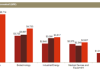 VCs poured significantly more money into deals in 2011, according to a recently released MoneyTree Report by PricewaterhouseCoopers and the National Venture Capital Association, based on data from Thomson Reuters. Venture capitalists invested $28.4 billion in 3,673 deals in 2011, an increase of 22 percent in dollars and a 4 percent rise in deals over the prior year. The amount of venture dollars invested in 2011 represents the third highest annual investment total in the past ten years. In terms of the fourth quarter, investments in the quarter totaled $6.6 billion in 844 deals, which is actually a 10 percent decrease in terms of dollar amount and an 11 percent decrease in deals from the third quarter of 2011 when $7.3 billion went into 953 deals.
![[ Back to EurekAlert! ]](http://www.eurekalert.org/images/back2e.gif) Public release date: 17-Jan-2012
Public release date: 17-Jan-2012 Share ]